Electricity Death Rate
Posted: 7/1/2020
The current death rate for stupidity around electricity is one-per-person.
A Fool With A Tool
Posted: 6/18/2020
There are many safety tools. But remember, a fool with a tool, is still a fool.
Take Electricity Seriously
Posted: 5/18/2020
You playing around electricity might end in someone playing "Taps" around you. Take it seriously.
The Blink of an Eye
Posted: 3/24/2020
The "Blink of an Eye" is how quick an electrical flash could steal your sight.
What Goes Around, Comes Around
Posted: 3/3/2020
"What goes around, comes around" could describe the flow of electrical current in a circuit, but it could also apply to unsafe behavior around electricity and the consequences of said behavior.
Emotional Sensitivity
Posted: 2/11/2020
'Emotional Sensitivity' is not a requirement for electrical safety training. Get it right the first time. Electricity doesn't apologize.
What doesn't kill you...
Posted: 1/28/2020
What doesn’t kill you will make you stronger, except Bears & Electricity, they will kill you.
If You Need It, It's Too Late
Posted: 1/9/2020
Using 'Safe Work Practices' and 'Personal Protective Equipment' to protect yourself from an electrical "Second Degree Burn" is a "Safety Minimum." Kind of like "Minimum Life Insurance." When you need it, it's too late.
Not Safety Mottos
Posted: 12/17/2019
"I'm sorry" and "Do over" are not safety mottos around electricity. They're epitaphs! Your "Epitaph" should not be a reminder to be safe.
Next Time = Last Time
Posted: 11/21/2019
"The next time could be your last" is a good safety reminder for those 'careless' around electricity.
Shocking News!
Posted: 11/12/2019
No one knows what electricity really is. But if you do something stupid around electricity you may find out what it feels like. Unfortunately you may not live to tell about it.
Don't Be Safety Stupid
Posted: 10/31/2019
We are taught not to use the word 'stupid.' But sometimes the most 'safety stupid' folks are those that already know it all.
Don't Make Safety Unnecessary
Posted: 10/17/2019
Speed limits tell you what not to do. Electrical safety guidelines tell you what not to do. Ignoring one could make the other unnecessary.

They're Not Safety Terms
Posted: 9/26/2019
In the book of Electrical Safety Terms, "Good Enough" should come right after "Life Insurance."
Gambling With Safety
Posted: 8/30/2019
In the Electrical Power World, Gambling with Safety is a Bad Bet. The results could be shocking, even fatal.
Faster Than A Speeding Bullet
Posted: 8/7/2019
Even if you're a 'Super Hero' and faster than a speeding bullet,' you're still too slow to dodge electricity. Over a million times too slow!
Speed of Pain
Posted: 7/16/2019
Hammer to thumb, 1 second, Darn! Fall, top of ladder to bottom, 2 seconds, Drat! Electricity through your body, 0.000001 seconds. No comment because you're dead and don't know it.
Lucky VS Good
Posted: 6/27/2019
There is a saying that one would rather be lucky than good. This is a dangerous approach to take when it comes to safe work practices. Luck runs out.
Safety Value of FMEA
Posted: 6/12/2019
(FMEA) Failure Mode and Effects Analysis: Knowing how electrical equipment fails is important to knowing how to protect yourself if it fails.
Crispy Isn't Safe
Posted: 5/29/2019
Caution, just wearing PPE, Personal Protective Equipment, around exposed electrical power equipment doesn't guarantee you won't get hurt if something goes wrong. It just make you less crispy.
Authority vs Safety
Posted: 5/14/2019
Around Electrical Equipment and Switchgear, when things go wrong, don't confuse somebody's authority for safety.
Not at the End of 3rd Shift
Posted: 4/30/2019
Safety Human Factor: It is not smart to provide safety training to 3rd shift employees at the end of their shift.
You're Not Exempt To Safety
Posted: 4/11/2019
Written safety procedures help protect everyone from someone's self-directed 'exemption' to common sense.
Choose The Best Illusion
Posted: 3/21/2019
In NFPA 70E (Electrical Safety) there is a lot of info on how to prevent "Serious Injury or Death." But in the real world there is often the illusion PPE protects us from ALL injuries. It does NOT. "Turn the power off." Then there's no injury and you can enjoy the illusion you'll live forever.
PATIENCE DOESN'T LEAVE A SCAR
Posted: 2/14/2019
"They also serve who only stand and wait." (Milton) is good advice because sometimes the hardest part of a job is standing around waiting for it to be safe to do the work.
Don't Be Disposable
Posted: 1/17/2019
If you think today the push for safety is going overboard, we would like to take you back to yesterday when an apprentice was disposable and a millwright's seniority was determined by how many fingers they were missing.
Be Safe with a ‘Kind Word’
Posted: 12/19/2018
This time of year and any time of year, a "Kind Word" is a good thing to give. A free gift. Unkind words can result in negative thinking, distraction, which can be very dangerous in the workplace, especially around electricity where the results could be shocking.
Just Check It!
Posted: 11/27/2018
Having a 'Lock-Out' on electrical equipment doesn't guarantee the power is off any more than a gun on 'Safety' guarantees it's empty. You must check it!
BE SAFE, LEAVE NOTHING BEHIND
Posted: 10/30/2018
In the electrical world, nothing wants to be left behind. Especially if you're working on electrical power
equipment or switchgear. MIDWEST recommends tool 'kits' that have a clear specific location for each
and every tool. If a tool is missing, you will immediately see that it's missing. When the job is done,
you'll know nothing was "Left Behind."
BACKYARD ELECTRICAL DANGER
Posted: 10/12/2018
Most electric utility residential overhead power lines are bare wires,
possibly 5,000 or 15,000 volts. Those along your backyard don’t like
kites, drones, your Kids’ airborne tent, or your Grand Dad’s fly fishing
practice. Deadly dangerous!
COMPLIANCE VS SAFETY
Posted: 9/20/2018
Being ‘Safety Compliant’ and ‘Being Safe’ are not equal. Compliance is a minimum.
‘Minimum Safety’ is an oxymoron. Choose “Being Safe.”
NFPA 70E 'Worker Alert'
Posted: 9/4/2018
To paraphrase a NFPA Electrical Safety Handbook 'Worker Alert,' you shouldn't just automatically use PPE without first considering other ways to reduce injury if something goes wrong.
All Electrical “Ground Fault Protection” Is Not Equal
Posted: 7/26/2018
Did you know the electrical “Ground Fault” protection for the main electrical power in big buildings could be 240,000 times less people protection than the electrical ground fault protection in homes. That’s because it’s designed to protect buildings, not people.
Save the Body, Save the Heart
Posted: 6/12/2018
Electrical current kills the heart and electrical arcing kills the body. Protecting from one, but not the other, can have the same tragic ending.
(Firearms) Electrical Warning Label
Posted: 4/19/2018
(Editing by MIDWEST)
Firearm Electrical Warning: A firearm Electricity has the capability of taking your life or the life of someone else! Always be extremely careful with your firearm electricity. An accident is almost always the result of not following basic firearm electrical safety rules.
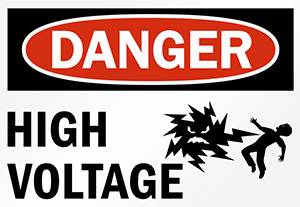
Burned by Chance
Posted: 3/27/2018
Q: What’s the chance a little drop ceiling hanger wire would slip through a small vent into a 2000 amp, 480 volt, totally enclosed electrical switchboard?
A: Once in two men’s lifetime. Result: The electrical switchboard shorted, it exploded, it burned, it happened. One man suffered horrible life threatening burns while the other man escaped with just a whole lot of pain. Never allow electrically unqualified personnel to work around energized electrical equipment. Not in front, not behind, not above, not near! Electricity doesn’t care about you.
Safety Tip, Confucius Says
Posted: 2/23/2018
Paraphrasing Confucius and “Safety.” There are three methods of learning to be safe. The first is Thinking, the greatest; the second is Imitation, the easiest; and the third is Experience, the most painful.

Working Safely May Take Longer. That’s Reality!
Posted: 1/26/2018
KISS, Occam’s Razor, or Reality? Choose reality. “Keep It Simple Stupid,” KISS, can be ‘Good Advice.’ “The easiest explanation how is the best explanation,” Occam’s Razor, also can be ‘Good Advice.’ But in the world of ‘Electrical Safety’ there are jobs that, to be performed safely, are not simple, have no shortcuts, and no explanation can justify not following good safety practices. There are jobs that take longer to make the equipment safe to work on than it takes to do the actual work. That’s Reality. Choose reality, choose safety.
Save The Twinkle In Your Eye
Posted: 12/18/2017
Save The Twinkle In Your Eye
The Holiday Season is full of beautiful things. Sights and sounds. Family and Friends. But in the Electrical Safety World we still see “not wearing or temporarily removing safety glasses” as the most common safety mistake. In the twinkle of an eye all things beautiful could disappear. A twinkle of the eye may take 300 milliseconds, but an electrical explosion 4’ away may only take 6 milliseconds to destroy that twinkle forever. Tis the season, have faith in the value of safety glasses.
NON ELECTRICIAN WANTS ANSWERS
Posted: 11/2/2017
NON ELECTRICIAN WANTS ANSWERS
(Safe Switch Operation)
Question: I’m not an electrician, but I have to operate a 100 amp switch a couple times a day. Any simple safety suggestions, basic stuff? Answer: Yes, use only one hand. Don’t touch anything else. Stand off to the side of the switch cover. Wear safety glasses and look away when operating the switch.
Recognize the Invisible Danger
Posted: 10/4/2017
Recognize the Invisible Danger
Electricity is invisible. But things that make electricity dangerous can be very visible… yet so commonplace we just don’t notice them. A good example is a cord plugged into a defective wall outlet. The cord hangs down pulling the plug part way out of the wall. You bump the cord, it might even fall out. You plug in the cord or unplug it effortlessly, a big clue. It should take some energy to plug or unplug a cord. There should be some physical resistance. That’s why you have to grab the end and can’t just yank the cord. When you see this ‘visible’ danger, it means the outlet is defective, trash, hazardous to your family. The poor connection, poor electrical contact pressure, high heat causing resistance in the outlet can cause a fire in the wall. So replace the outlet, not your house. Some places, like hospitals, test wall outlets for proper tension, proper electrical contact. A simple tester is available on line or in a few hardware stores.

SMALL TIP, IS A BIG DEAL
Posted: 9/13/2017
SMALL TIP, IS A BIG DEAL
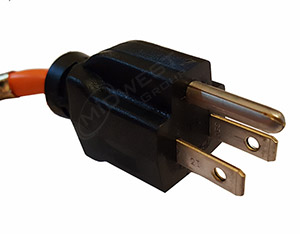
Safe extension cords have a 3 prong plug. One prong tip is round and is longer than the two flat prongs which actually do all the work. Yes, the longer round tip may help your aim plugging in the cord, but the ‘Big Deal of this Small Tip’ is that it protects you, your Kids, whole family, not the dog, from a deadly shock by carrying shock current to ground so it doesn’t go through you. Because the tip is longer, it protects you before current flows until after current has stopped. For your personal safety, this ‘Small Tip, Is a Big Deal.”
Electrical Ground Fault Protection - Part 2 BODY VS BUILDING
Posted: 8/3/2017
Residential "Ground Fault Protection" turns off the power if there is 0.005 amps of ground fault current, electricity, a tickle. Industrial/Commercial protection may need as much as 1200 amps of ground fault current before turning off the power. That's 240,000 times as much current as residential protection. You're toast. The industrial protection does not care about the human body. Call this protection "Tickle vs Toast."
Electrical Ground Fault Protection - Part 1
Posted: 7/21/2017
Electrical Ground Fault Protection - Part 1
In our Electrical Safety Training Classes, MIDWEST frequently runs into confusion over the difference in “Ground Fault Protection” between residential and industrial/commercial buildings. Residential ground fault protection is designed to protect the human body, YOU. Industrial/Commercial ground fault protection is designed to protect the BUILDING from burning down. A huge difference! The proof in the next “Safety Tip.”
Residential Ground Fault Protection Industrial Ground Fault Protection
NO BURN, NO INJURY MYTH
Posted: 6/29/2017
“No Burn, No Injury” is a dangerous myth in the electrical power world. It’s a Tough Guy or Gal attitude! A shock can cause serious injury to the body despite very little visible damage. An electrical burn causes wicked pain, so you know you’re hurt and need medical attention. But no pain does not mean you haven’t suffered serious internal injury. You still may need medical attention, no matter how tough you are. Be smart, Myths are not safe in the electrical world.
High Voltage LOTO Mistake
Posted: 5/23/2017
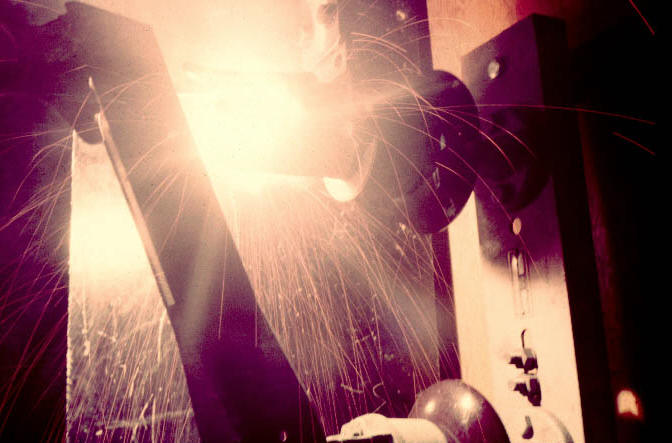
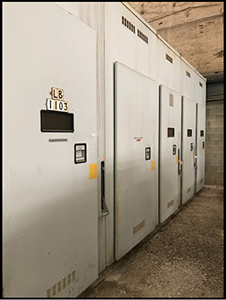
MIDWEST uses a written LOTO MOP (Method of Procedure) for high voltage switchgear work because we want assured protection from (1) Function and from (2) Exposure, ie exposure to high voltage. Frequently MIDWEST works under a customer’s preferred electrical contractor, and there are many great contractors. But not all work around high voltage switchgear. On a particular project the contractor had all the electrical equipment locked and tagged, top to bottom, so nothing could mistakenly be turned on during the work. However, the main high voltage switch door interlock key was left in the door such that the door could be opened and anyone could just reach in and touch the energized line side (13,200 volts) service bus. Wicked dangerous. LOTO protected function, the switch could not be closed, but not exposure to 13,200 volts. That was missed. The foreman was glad to remove the key and tag the door. The attached image is similar to the equipment on the project. Safety around high voltage switchgear is a whole different universe from 600 volt equipment.
Fail Positive vs Fail Negative
Posted: 5/12/2017
MIDWEST has special safety terms describing electrical equipment defects and failures, 'Fail Positive' and 'Fail Negative.' A 'Fail Positive' equipment defect or failure is one that would not cause serious injury to personnel or damage to equipment. A 'Fail Negative' equipment defect or failure is one that could cause serious equipment damage or worse, serious injury or death. Often neither can be recognized when the equipment is energized. MIDWEST's most basic recommendation around electrical equipment and switchgear is positioning yourself out of harm's way, always wear safety glasses and proper PPE, and add a bit of paranoia, ie be very careful. More details in future safety tips. Attached is an image of an intact high voltage fuse clamp and destroyed one. The fuse was barely hanging in place. One would not want to be standing in front of the enclosure door during a "line side" fault. That could be a very serious "Fail Negative."
Don’t Be a Klingon. But “Live Long and Prosper”
Posted: 4/20/2017
An electrical shock can cause "Tetanus," a condition where your finger muscles contract and you can't let go. This is sometimes called being "froze to the circuit." Even more shocking, after the current is turned off, you may not regain voluntary control over your hand muscles right away to let go. Position yourself so you can pull away or fall away from the source of the shock. Don't be a Klingon . "Live Long and Prosper"
"STARTLE REFLEX" CAN BE DANGEROUS
Posted: 4/4/2017
“Startle Reflex” may be funny watching a horror movie, but in the electrical world, it can be dangerous. The “Startle Reflex” is an instant involuntary physical response to sudden noise, light, or movement. Anything from someone cracking gum to slamming a door. Or just walking up behind you to say ‘Hi.’ Your head, arms, or whole body may jerk up or away from the noise, movement, or light. Very dangerous if you’re on a ladder or balancing yourself in a risky position or near energized equipment. My personal favorite, having a cell phone in your pocket, on vibrate, go off just when you make contact checking high voltage. Always work in a safe space. Unexpected things happen, including Startle Reflex.
New Motorcycle & New Circuit Breaker
Posted: 3/2/2017
Sometimes there are things in
brand new condition that are perfectly useless, or worse, dangerous. Below are
images of two examples of “Perfect but Useless,” a motorcycle and a circuit
breaker. The circuit breaker was sent to MIDWEST by a customer who said it was
“brand new.” But it was in their storage and they didn't know where they got
it. So they had MIDWEST test it because it had to be in perfect condition. We
tested it and it was perfect, perfectly useless…as you can see by the pictures.
One of the main contacts was completely blasted, destroyed, trashed. In the
electrical world it can be very dangerous to assume, because something looks in
perfect condition, it’s okay to not follow normal safe operating practices,
take normal precautions or use PPE. By definition, the motorcycle (see image) is also in perfect condition,
beautiful, immaculate. However, you would need more than a helmet to be safe
riding it.


Below is a close-up of the blasted main contact on the circuit breaker
Shocking. When Big is Bad and Little is Good Electrical Ground Fault Shock
Posted: 2/9/2017
Electrical
ground fault shock protection in homes, apartments, and some public
places protects you from very small ground fault shock, as small as
0.005 amps of shock current. Great protection. But the main ground fault
protection in large buildings is designed for as much as 1200 amps of
shock. Huge, very dangerous, up to 240,000 times more dangerous. Not
designed to protect you. If you are an electrician, you know industrial
vs residential are two different electrical universes.
SHOT AND A BEER
Posted: 1/19/2017
It may come as a surprise to some, but fatigue and worry can be more dangerous than a shot and beer. Alcohol will wear off over time, fatigue and worry can only get worse. The days where a maintenance electrician could have a couple of beers at lunch are over. Now MIDWEST sees electricians fatigued, just plain worn out. trying to keep production going with fewer people. Add the worry of job security on top of that and these distractions can become quite deadly. Consider the veteran electrician who was 'shocked' to learn he forgot to turn off power to a 480 volt machine before troubleshooting. When asked about the accident he replied that he was "just so tired." He was lucky nobody got hurt. (Archive)

Brain Lock
Posted: 1/5/2017
|
“Brain Lock” is MIDWEST’s term for a mental state where one is absolutely certain but 100% wrong. You look right at a 200 amp switch that is on and say it is off. You know it’s off. The danger is your certainty, so you don’t double check. MIDWEST’s experience is that ‘Brain Lock’ is caused by being distracted or in a hurry. When it comes to electrical safety, slow down, double check, stop, think. Thinking won’t hurt you. “Brain Lock” will.
.
|

|
It’s not a bet. Your child is not disposable.
Posted: 12/6/2016
A MIDWEST customer asked if it was okay for his kids to play around the green electrical box in his back yard. Said his ‘Little Guy’ liked to sit on it because it was warm. Answer, NO, it is not safe. Technically, it is safe as long as something doesn’t go wrong. But that’s chance, call it a bet. Lose a bet, lose your money. Money is disposable, it can be replaced. Your child is not disposable. So don’t bet on their safety. Stay away from those electrical boxes. If there is an electrical fault while your child is touching or even just near the electrical box, they could receive a fatal shock. Side note, don’t drive stakes into the ground to put up a fence around an electrical box without calling diggers hotline to locate the high voltage underground wires. You’re not disposable either.
From the “Unbelievable Accidents Do Happen” Book Unbelievable Event #1
Posted: 12/5/2016
Unbelievable,
can you imagine the blast when a fish tape being pushed through a
conduit suddenly springs out the end, hits the floor, and goes right
through a lower vent of a 5000 volt dry type transformer. Flash, Blast,
Boom! Lights out! Unbelievable blast and flash for the electrician in
the switchgear room. Unbelievable he didn’t get hurt. Unbelievable
no one was injured. Unhappy transformer. Unhappy owner. Happy safety
director, no one got hurt! The danger is not believing ‘Unbelievable’
accidents do happen. Yes, after 40 years, MIDWEST is paranoid about
safety. We are a believer.
Maintenance Electrician’s Safety & OSHA General Duty Clause
Posted: 12/5/2016
A
maintenance electrician stopped at MIDWEST to pick up new circuit
breakers and complained about his unsafe boss. Said Corporate was 400
miles away and his boss doesn’t care. Just growls “I don’t give a ****,
just get it done.” He felt trapped and didn’t have a safe leg to stand
on because he had no authority. He was just an employee. MIDWEST showed
him OSHA’s famous “General Duty Clause,” particularly the often ignored
second clause that says, “Each employee shall comply with
occupational safety and health standards and all rules, regulations, and
orders issued pursuant to this Act which are applicable to his own
actions and conduct.” So Federal Law makes each employee
responsible for the safety of their “own actions and conduct.” MIDWEST
suggested he web search ‘wikipedia osha general duty clause.’
This man’s boss must be a safety Outlier, a Dinosaur, T Rex. Most
maintenance folks we work with are very safe. Outliers are dangerous.
Child Holiday Safety Tip
Posted: 12/5/2016
It’s
the holiday season. From Thanksgiving to New Years we light up our
world. And that usually means lots of cords to provide all that
illumination. Small children really like to chew and bite on electrical
cords that are often right at their mysterious ground level world.
Protect your children and pets too. Put the cords out of reach or out of
site. Have a wonderful and safe Holiday Season.
Talking Can Be Dangerous
Posted: 12/5/2016
In
the electrical world, talking can be dangerous to your health! A common
unsafe human factor is someone talking to you while you’re in the
middle of work that has a real level of danger, requires your full
attention, like checking voltage, grounding, LOTO, trouble shooting,
anything requiring PPE. Per OSHA you are responsible for moving
unqualified or unprotected personnel a safe distance from your work. If
necessary, we suggest it be a distance far enough for them to ‘stop
talking.'
"Jury-Rigging” Doesn’t Make You a Hero
Posted: 9/16/2016
In
years past “Jury-Rigging” was sometimes a ‘pat on the back’ temporary
solution for a tough electrical problem, often an emergency requiring a
temporary repair. And temporary soon translated into permanent. MIDWEST
still runs across a few, not many, some ingenious, some insane. But
they all are wicked because you don’t know they are there. A contractor
called for a replacement switch because someone had used a short piece
of 2X4 to hold the movable contact assembly closed on a large busted
switch. Safety Tip, never presume electrical equipment is going to work
safely, much less properly, when trying to operate equipment that has 20
years of dust on it. Always stand to the safe side of the equipment,
out of harm’s way, so you are not a target for something “Jury-Rigged”
if it goes boom. Hate that sound!
“Go Faster, Get Done Quicker”
Posted: 9/2/2016
“Go
Faster, Get Done Quicker” is a wicked motto when operating electrical
equipment. Mistakes are made and equipment busted when in a hurry.
Slamming a circuit breaker closed or cranking a Bolted Pressure Switch
the wrong way because you’re in a hurry, can be dangerous and very
costly, $1000s. Like $6000 because of a busted half ounce metal latch
inside a 2000 amp circuit breaker. Be Steady, Be Safe!
The Unbelievable Does Happen
Posted: 8/18/2016
In the electrical world always
double check your work one last time when you are done. Do not rely on
the “Smoke Test.” It’s not in the Safety Manual. And it could wreck your
day, maybe your life. During a service outage, MIDWEST found a
‘Lineman’s Pliers’ lying across the phases of the 480 volt bus of a dry
type power transformer. No short, no blast, pretty boring.
Unbelievable, but true. It had been there at least 3 years. This is why
we are paranoid about safety and always double check our work. The
“Unbelievable Does Happen” and it could be, not exciting, but very
tragic.
Garage Electrical Safety Tool
Posted: 7/21/2016
MIDWEST was asked, if we
could pick just one simple electrical safety device for a shop or garage, what
would it be, other than safety glasses? Our answer was a simple plug-in “Ground
Fault Circuit Interrupter.” Used on extension cords and plug-in electrical
tools. Inexpensive and specifically designed to protect you from an electrical
ground fault shock. Protects families, not tools. Tools can be replaced, you
can’t.
No Better Friend, No Worse Enemy
Posted: 7/18/2016
The Roman General Sulla’s epitaph, 78 BC, “No Better Friend, No Worse Enemy” has had many variant translations. Here we apply it to safety. If you are a “Friend to safety,” you will be rewarded in full. If you are an “Enemy to safety,” you will be punished in full. Make safety your friend, you will find “No Better Friend.” For the few that view safety as a nuisance, they have “No Worse Enemy” than themselves.
DON'T CROSS THE LINE, THINK
Posted: 6/23/2016
We have no concern going down the road 60 mph protected from an oncoming
20 ton truck by a 4” yellow line. No problem checking that 3 second
text message, even though the truck closes by 528 feet, a 10th of a
mile, in those 3 seconds. We just don’t cross the line! In the
electrical world, no worries either because “We don’t cross the line.”
We wear our safety glasses, hard hat, gloves, PPE... Comfortable words,
we feel safe. But ‘thinking’ should remind us these things don’t
eliminate danger or accidents, they reduce consequences. Less pain, not
no pain. Thinking is still a safety tool.
Electrical Safety Motto, “Don’t Be a Horse’s Rear End!"
Posted: 5/26/2016
Over 40 years
MIDWEST has worked with many great Electricians and Engineers. We’re all
a lot safer today. But we still have a few folks that say, “This will
only take a second,” and before you know it, they have stuck their hands
or head into a live 480 panel just to check something… cable or bus
size, most anything, but just for a second. Reminds me of a lesson I
learned on the farm as a young lad…“Don’t stand behind a horse’s rear
end, you’re not that quick!” Painful! Think macro pain, a nuclear blast
may get you in maybe 0.000001 seconds, you’re vapor; a bomb in maybe
0.0001 seconds, you’re toast; an electrical blast in possibly 0.001
seconds, you’re just crispy. Very Painful. So, when it comes to
electrical safety, “Don’t be a horse’s rear end, you’re not that quick
either!”
How Can Experience Be Dangerous?
Posted: 4/21/2016
Years of electrical experience thinking something isn’t dangerous because nothing bad ever happened, can cause experienced people to think it’s safe. Just thinking electrical equipment is safe can be dangerous because electricity doesn’t care what you think. Wear PPE. Lockout, Tag out, Check voltage. Ground it. Always.
A Good Flashlight, 50 Times Safer
Posted: 4/5/2016
A
good flashlight, the unappreciated safety tool, can make your
electrical work 50 times safer when trouble shooting. The “inverse
function” of an arc blast causes the heat to increase 4 times, 400%,
when moving just half way closer. Moving very close because of poor
lighting quickly increases the danger over 50 times. That’s a really bad
idea. 50 times bad. A good flashlight will help prevent this. When it
comes to safety, you can never have too much illumination, whether it’s
in your hand or in your head. Get a good flash light, know your place,
and save your face. That’s a really good idea. Please be safe.
Safety tip courtesy of MIDWEST Electrical Testing, Switchgear Group
Perfectly Defective, Horrifically Dangerous
Posted: 3/10/2016
Perfectly Defective, Horrifically Dangerous
Safety equipment requires a hard focused, uninterrupted, undistracted visual inspection before use.

Image
of a “Life Safety” high voltage ground cable that looked in perfect
condition, looked brand new. But was perfectly 100% defective.
Horrifically dangerous because it looked perfect. A MIDWEST ‘hard
focused’ inspection revealed the defect. Testing documented it. Our
customer was grateful. And MIDWEST remains “Paranoid about safety.”
.
ELECTRICAL SAFETY TIP - Special Series - Part 6
Posted: 3/10/2016
Shocking Electrical Fallacy
“I know the power is off because I turned it off.”
This “Logic Fallacy” is defined as a CIRCULAR ARGUMENT. Restating the argument rather than proving it.
This fallacy is especially dangerous because the statement seems
obviously true. But all you know for sure is that you turned off the
switch or circuit breaker. You don’t “know” the power
is off. You must check for voltage, always. And high voltage must be
grounded, always. Too often MIDWEST’s Field Services finds all the
electrical power is not off, often for very odd or scary reasons. Think
consequences, not probability.
ELECTRICAL SAFETY TIP - Special Series - Part 5
Posted: 3/10/2016
Have you seen this….
Folks
working around electrical equipment with a pair of ‘dime store’ wrap
around plastic safety glasses pushed up on top of their heads because
they can’t see with them on. And they’re right. Makes sense. The
glasses get dirty, scratch, don’t fit and make you sweat so much you
can’t see. But, it’s not safe! Get
a good pair of polycarbonate impact resistant, scratch resistant safety
glasses. This is the material used in astronaut helmets and space
shuttle windows. Makes better sense.
Stop or Die!
Posted: 3/10/2016
In
the electrical power world, when an experienced electrician or engineer
says "Stop!" you need to stop in your tracks. MIDWEST has seen many
instances of inexperienced electrical personnel who almost killed or
seriously injured themselves or others because they didn't stop
instantly when instructed. Experience recognizes danger long before it
may be apparent to the inexperienced. "Stop or Die!" In the electrical
power world, a warning of "Stop!" means freeze. It doesn't mean "Let's
talk." In electrical safety, the inexperienced must recognize the value
of the experienced or they become the danger. (Archive)
"GRAVEYARD SHIFT..."
Posted: 3/10/2016
Folks that have worked third shift may claim you haven’t really worked for a living unless you have worked the Graveyard Shift.
That was back when the Graveyard shift was the shift that was expected
to “Get things done.” Code talk for take chances, risks, just get it
done and, at the end of the shift, if you’re a millwright, count your
fingers. If they’re all there, you’ve had a good night. Fortunately,
those days are gone. Almost! MIDWEST works a lot of off hours with many
great electrical contractors and electricians. But we also see the most
common safety violation. Not wearing safety glasses. Nobody is around,
so safety glasses become a designer hair piece. Remind each other to
wear your safety glasses, because the Graveyard Shift isn’t code talk
for “Look Mom, no eyes!”
Dangerous “No Fear Factor”
Posted: 3/10/2016
Electricians
and Engineers with pre-PPE, Personal Protective Equipment, experience
and scars know PPE doesn’t eliminate the dangers around electrical
equipment. It just reduces pain. Having “No Fear” just because you’re
wearing PPE is a new dangerous “No Fear Factor!”
ELECTRICAL SAFETY TIP - Special Series - Part 4
Posted: 7/15/2015
"Know Your Place, Don't Tingle!"
Imagine you’re having a bad day and are working on a little electrical panel up on a cramp balcony. You get a little ‘tingle,’ jump back… can’t help it, and flip over the balcony railing behind you, landing on a 1000 ton compressor 15 feet below. Your bad day just became a bad life. Often the physical reaction to a small jolt causes a lot more pain and damage than the shock. “Know your place and Don’t Tingle” around electricity.
ELECTRICAL SAFETY TIP - Special Series - Part 3
Posted: 7/14/2015
"One Armed Man"
Your heart beats with a rhythm from electrical signals less than 1/10th of a volt. If the timing of that rhythm is broken or stopped or the heart’s nerve cells destroyed by electrical shock, your heart is broken. A shock across your heart can be the most dangerous. Think like a one armed man or a one armed women and avoid a shock from one hand or arm to the other.
ELECTRICAL SAFETY TIP - Special Series - Part 2
Posted: 7/2/2015
SHOCK ICEBERG EFFECT
If you get a serious electrical shock but don’t see physical damage or feel like you got blasted, you should still be ‘nervous.’ The nerves in your body are great conductors. That’s how they keep you alive. But nerves can be damaged or destroyed by the heat of electrical shock current through them and you may not even know it. This is the ICEBERG EFFECT. The serious, even deadly, damage is under the skin, unseen and you don’t know it until it’s too late. “Go to the emergency room!”
ELECTRICAL SAFETY TIP - Special Series Part 1
Posted: 6/26/2015
THE "LET GO PHENOMENON"
An Electrician says, “I got a shock and couldn’t let go!” Is this possible? Fact or Fiction?
Yes it is possible! Fact! This is the “Let go phenomenon” and can occur when the shock current through your hand and arm is high enough to make your muscles contract and stay contracted. Medically this is called “Tetanic Contraction.” The muscles of ‘contraction’ are stronger than the muscles of ‘extension.’ It is involuntary sustained contraction of the hand and arm muscles and you can’t let go until the shock current stops. This SPECIAL SERIES “Safety Tip” is “Always position yourself so you “fall away” from whatever you are working on, if something goes wrong.” Make this a simple habit. Better than getting blown away, permanently.
At $50,000, looks can be deceiving, even Dangerous! Trash!
Posted: 6/2/2015
MIDWEST has four drums of circuit breakers, worth over $50,000, ready to go
to the TRASH. Actually to a trash and metals recycler for little scrap value.
All these circuit breakers failed MIDWEST’s testing procedures. Overcurrent
testing. Fault current test, etc. They may look perfect, beautiful. But they
are defective, even dangerous. That is why MIDWEST tests our reconditioned
equipment, including circuit breakers, before we will sell it. Because, even at
$50,000, looks can be dangerous.
Shocking Protection For Your Family!
Posted: 5/26/2015
For less than the cost of burgers and fries at a fast food restaurant, you can purchase an electrical GFCI, ground fault circuit interrupter, and use it with extension cords to protect yourself and your curious 6 year old. This device is designed specifically to protect the human body, to protect you and your family. Plug this little GFCI into any outlet and then plug your extension cord into the GFCI. Simple. A very tiny amount of electricity, less than 7/1000 of an amp, going where it shouldn’t, and the GFCI trips INSTANTLY to shut off the electricity in less than 25/1000s of a second. That is great electrical SHOCK protection. Found at most hardware stores.
Circuit Breakers Do Not Protect People
Posted: 3/25/2015
Circuit Breakers do not care about you. They are designed to only protect equipment. MIDWEST tests 1000s of breakers. A conventional 600 amp breaker with over 1200 amps of overload may take over 2 minutes to finally trip. And it may require a fault over 8000 amps before it will trip. For us, it only takes a 1/10 of an amp to kill our heart, and the breaker ‘reset’ will not change that. The breaker doesn’t care. Protect yourself!
Don't Be Afrayed
Posted: 3/15/2012
A frayed 2 wire electrical cord is extremely dangerous; shocking when you become the ground and dead if it crosses your heart. Don't attempt to repair a frayed cord, replacement is the safer solution.
Sanity and You
Posted: 12/15/2011
Einstein once defined insanity as doing the same thing over and over and expecting different results. This is no excuse not to double check everything (voltage, grounds, lockout tags, etc.) before working on electrical equipment. There’s nothing insane about safety!
Odds vs Reality
Posted: 11/2/2011
When it comes to electrical power, saying you're 99% sure it's safe is the same as saying you're 1% sure it'll kill you. Odds vs. Reality. Choose Reality!
|
Know Safety? No Injury.
No Safety? Know Injury.
- Author Unknown
|
|
The Ring of Fire
Posted: 6/28/2011
There's a reason gold and silver contacts are popular in both the electric and electronic worlds, and it isn't just because they are fashionable. Metal jewelry such as rings and necklaces provide a great connection between an electrical source and your body. Remember to remove all jewelry before doing any work near electricity.
Thinking Doesn't Hurt
Posted: 2/1/2011
Trust us, it's a much simpler task to ask, "Should I really be touching this?" than it is to drive yourself to the emergency room with one arm. Just remember this, think smart, think safety.
Familiarity Fallacy
Posted: 2/1/2011
Why do horrible accidents occur during such routine electrical activities? Familiarity breeds carelessness! When a dangerous activity becomes routine, there is a very real risk that confidence will allow corners to be cut. "It's safe because I've done it a million times." A common human fallacy and a great way to get an instant electrical tan, singe off that pesky body hair, or perhaps just remove your eyes or pulse. Remember the Familiarity Fallacy.
Unsure? Unsafe!
Posted: 2/1/2011
Unsure is unsafe in the electrical world. When doubtful of the safest way to perform an electrical task, stop dead in your tracks before you become dead in your tracks.
What "You Know" May Hurt Me
Posted: 9/16/2010
MIDWEST calls this the "I Know, Safety Fallacy." It goes something like "I know it's safe, therefor it must be safe." This false belief, especially in the hands of authority, can be extremely dangerous. We see the biggest electrical safety mistakes made when someone knows it's safe, so some safety procedures can be skipped. Classic "I know" tragedy lines include, "I know it's turned off..." "I know it's not high voltage..." "I know I can do it hot..." "I know that's the right switch..." "I know it's safe..."
Shot and a Beer
Posted: 9/16/2010
It may come as a surprise to some, but fatigue and worry can be more dangerous than a shot and beer. Alcohol will wear off over time, fatigue and worry can only get worse. The days where a maintenance electrician could have a couple of beers at lunch are over. Now MIDWEST sees electricians fatigued, just plain worn out. trying to keep production going with fewer people. Add the worry of job security on top of that and these distractions can become quite deadly. Consider the veteran electrician who was 'shocked' to learn he forgot to turn off power to a 480 volt machine before troubleshooting. When asked about the accident he replied that he was "just so tired." He was lucky nobody got hurt.
The Benefits of Redundancy
Posted: 9/16/2010
Most people wouldn't consider having the word "Redundancy" associated with their job as a good thing, but when it comes to safety nothing could be better. MIDWEST strongly encourages redundancy among its employees when in the workplace. Why only check once when it will only take a few moments extra to double or triple check? You only need to catch one mistake in a lifetime to see the benefits of redundancy.
Shocking News!
Posted: 9/16/2010
When checking electrical equipment for voltage, have only one point of contact. Do not touch anything else. Do not lean against, sit on, kneel on, hold on to anything else. Only your leather shoes should be touching anything else. Electricity needs a path into your body and a second path out of your body. If it can’t get out, it won’t go in. This is the difference between a little tingle, a warning, and a deadly shock.
Shocking news, isn’t it!
More Life Insurance is Not a Safety Program
Posted: 6/24/2010
Some of MIDWEST's scariest requests come from home owners working in their main panel. When they take off the cover and then ask us for a replacement main circuit breaker or how to replace it themselves, we tell them the most important step is to buy more life insurance because, "Your lovely wife will look just adorable in that new sports car." Then we explain why they are in extreme danger and must call a qualified electrician or the Utility. Remember, Never ever remove the cover for an electrical panel, unless you are truly qualified.
Left Behind
Posted: 6/24/2010
We've all heard the stories, a stressed-out surgeon leaves a scalpel, gauze, or anything else you can imagine inside a patient. This usually causes countless complications down the road. The same thing can happen in the electrical world, with equally devastating results. All it takes is one late night out, a tight deadline for a task, or even just a momentary lapse of judgment for someone to leave a tool behind when finishing a job.
MIDWEST advises all employees to put tools away immediately after using them, and to never rest a tool on a piece of equipment, even for a moment. It only takes a ten dollar wrench, left behind, to do thousands of dollars in damage
Shocking Kitchen Sink
Posted: 6/24/2010
Huge "Safety Tip," If you're touching your kitchen sink, or any other water supply, do not touch anything else that has electrical power to it. Never hold the water faucet with one hand and reach out with the other for the light switch under the stove, or touch the toaster, can opener, blender, coffee maker, refrigerator, or hair dryer...anything electrical. The sink is a perfect ground, which is the perfect home for electricity. Just a tiny amount of electrical juice going into one hand and out the other hand, will cross your heart and break it! And then, your family's too.
The Internet Just Kills Me
Posted: 5/11/2010
Internet electrical training videos sometimes just kill me when I watch them and see all the horrible safety mistakes made by the presenters. A few minutes browsing through these videos and you find people not wearing safety glasses, wearing jewelery around electricity, not using a fused voltage detector, using a voltage detector that requires both hands across the circuit, not wearing at least a long sleeve cotton shirt around live electrical equipment, wearing latex gloves for shock protection, pointing within inches of energized electrical equipment, and sticking their faces up close to energized equipment "to see better". That is a great way to get an instant face lift from a sudden electrical arc. Yes, we "are" paranoid about electrical safety.
Stop or Die!
Posted: 4/27/2010
In the electrical power world, when an experienced electrician or engineer says "Stop!" you need to stop in your tracks. MIDWEST has seen many instances of inexperienced electrical personnel who almost killed or seriously injured themselves or others because they didn't stop instantly when instructed. Experience recognizes danger long before it may be apparent to the inexperienced. "Stop or Die!" In the electrical power world, a warning of "Stop!" means freeze. It doesn't mean "Let's talk." In electrical safety, the inexperienced must recognize the value of the experienced or they become the danger.
Now You See It...
Posted: 4/13/2010
The most common electrical safety violation we have seen over 30 years is still electricians, mechanics, engineers, or anyone not wearing or temporarily removing their safety glasses. Just for a moment so they can read something. Never, ever remove your safety glasses around electrical equipment. Not to read that number or to see where that wire goes, Never! A sudden small electrical blast and you're blind, blind forever and that's a long time.
Making Gravity Your Friend
Posted: 3/16/2010
When working on electrical equipment, always position yourself so you fall away from the equipment. If something goes wrong, you do not want a shock or arc to cause you to fall into any exposed wiring or bus. This simple work practice has saved many lives and prevented a lot of pain and misery. Make gravity your friend.
Looking Down the Barrel of a Loaded Gun
Posted: 2/16/2010
Would you look down the barrel of a loaded gun? Never! The thought is too repulsive. You couldn't force yourself because you know what could happen. Sometimes electrical dangers may be just as lethal, but not so obvious. The work may be unusual, an emergency, or maybe there are just no apparent safe work practices to follow. Then how do you make decisions?
MIDWEST recommends thinking, "What are the possible consequences?" Not the probability. If you think in terms of probability you may be looking down the barrel of that loaded gun, thinking, "What's the chance..." Bang! Buy a plot and send flowers.
OSHA forbids activity that could seriously injure or kill. Think consequences, not probability.
Removing Load As Part of a Plant Shutdown
Posted: 1/1/2010
The first step in a plant shutdown procedure is to remove all possible
load before opening the main disconnect switch. As a routine procedure
it can easily lull the responsible party into a false sense of
confidence that all possible load has been isolated. Perhaps new
equipment added to the system has not been taken into account or
equipment operating at a remote location has been overlooked. It is
important, in the beat to de-energize, to step back and take a moment
to review the plant power distribution system one more time before
proceeding ahead.
Area Awareness…
Posted: 1/1/2010
Stop, Look, Listen. See what is happening in your work area. Is there anything which appears to be a potential safety hazard which sends up a red flag? A ladder stationed in a blind corner. An extension cord placed in a dangerous position. Water laying on the floor. Stay alert. But keep in mind there is no list of potential safety hazards which can substitute for heads up situational awareness.
Grounding Out
Posted: 1/1/2010
Workers not wearing arc flash protection should keep a safe distance from the grounding termination location. The safe distance is determined not just by voltage, but now also by the size of the possible arc blast At MIDWEST workers not suited up and not directly involved in the grounding out procedure remain out of the area until grounds have been safely installed.

